
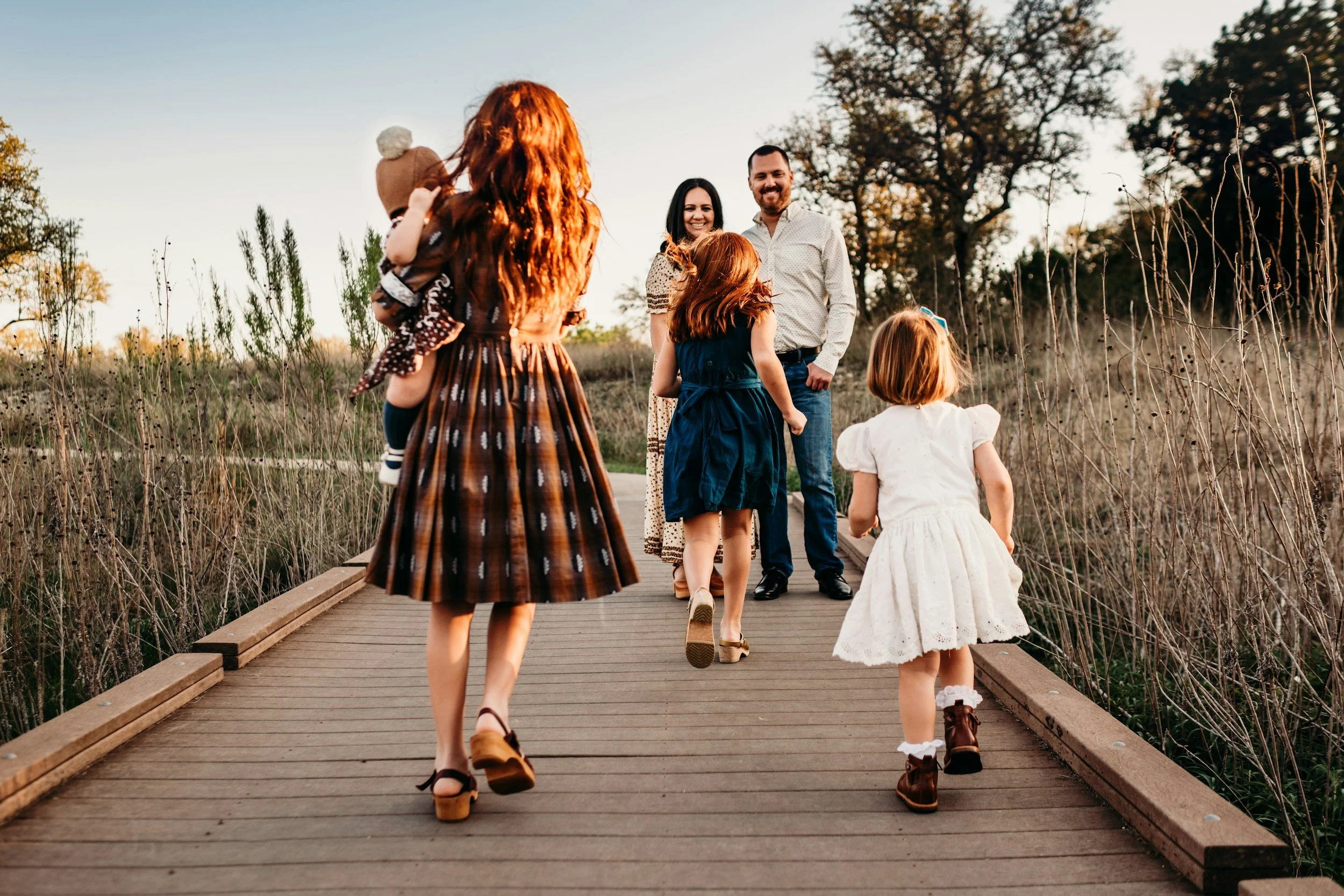
Repairing relationships. Rebuilding trust. Creating new ways of being together.
The Ripple Effect
When one relationship shifts, the whole system begins to change.
Families are not just groups of individuals living under the same roof. They are living, breathing systems. Every reaction, every silence, every moment of connection or conflict moves through the entire family like a wave.
When one person begins to change, it rarely stays contained.
A parent who learns to pause instead of react changes the emotional tone of the home.
A child who finally feels heard may soften behaviors that once seemed impossible to reach.
Two co-parents who find a more respectful rhythm can reshape a child’s sense of safety in the world.
Small shifts create powerful ripples.
Family therapy isn’t about fixing one person or chasing perfection. It’s about helping the system find a new balance—one rooted in honesty, emotional safety, and mutual respect.
As new patterns begin to take hold, the effects move outward. Tension eases. Communication becomes more direct and less charged. Children no longer have to carry the emotional weight of the entire system. What once felt stuck starts to feel possible again.
This is the ripple effect.
The work you do together doesn’t stay in the therapy room. It shows up at the dinner table, during school mornings, in co-parenting exchanges, and in the relationships your children will one day build for themselves.
When a family system becomes more stable, more open, and more connected, the impact reaches into the future. It shapes how the next generation understands love, conflict, repair, and belonging
Our Approach
Families are living systems. When one part is hurting, the whole system feels it.
At Systems Centered Wellness, family therapy isn’t about identifying a “problem child” or assigning blame. We look at the patterns, roles, and dynamics that shape how everyone interacts.
Our work focuses on helping families move out of cycles of conflict, silence, or disconnection and into more honest, supportive, and cooperative relationships.
Family struggles rarely exist in isolation. They grow out of stress, transitions, unspoken expectations, generational patterns, and the pressures of the world around us.
Using a family systems lens, we help families:
Understand repeating conflict patterns
Improve communication and emotional safety
Navigate transitions like divorce, blending families, or adolescence
Heal attachment ruptures
Build more supportive, respectful relationships
Instead of asking, “Who is the problem?”
We ask, “What is the system trying to tell us?”
Beyond Talk Therapy
Many families come to therapy after months or years of conversations that go nowhere. Talking alone doesn’t always reach the deeper emotional layers where change happens.
That’s why we integrate experiential methods into our work.
Experiential Therapy
Experiential therapy involves activities, movement, and real-time interaction rather than just discussion. This might include:
Guided exercises
Role reversals
Structured family interactions
Creative or somatic activities
These approaches help family members feel and understand each other differently, not just think differently.
Psychodrama
Psychodrama is a therapeutic method that uses guided role-play and enactment to explore real-life situations.
In family therapy, this might look like:
Stepping into another family member’s role
Re-creating common conflict scenarios in a safe, structured way
Practicing new responses and communication styles
Psychodrama helps families:
Build empathy and perspective-taking
Break rigid roles and patterns
Express emotions that are hard to say directly
Experience change, not just talk about it
For many families, these methods create faster, more meaningful shifts than conversation alone.
Why this Matters for Families
Family conflict lives in tone, body language, and emotional reactions—not just in words.
Experiential and action-based approaches:
Reduce defensiveness
Increase emotional understanding
Help children and teens engage more naturally
Create moments of genuine connection
Turn insight into real-world change
Therapy becomes a place where families don’t just talk about doing things differently—they actually practice being different together.
Who We Work With
We support families navigating:
Divorce or separation
Co-parenting transitions
Blended family dynamics
Parent–teen conflict
Emotional or behavioral challenges
Communication breakdowns
Major life transitions
What to Expect
Family therapy sessions are structured, supportive, and interactive. You can expect:
Clear guidance from the therapist
Practical communication tools
Experiential exercises when appropriate
Space for every voice in the room
A focus on solutions, not blame
Our goal is to help families leave sessions with more understanding, more connection, and more hope.
Work with us!
Family change doesn’t happen by accident.
It happens when people are willing to show up, try something new, and stay in the process together.
Reach out to get started!