
“There is always light. If only we’re brave enough to see it. If only we’re brave enough to be it.”
– Amanda Gorman
Our Story
Systems Centered Wellness is a counseling group practice, created by Dr. Sabrina Hadeed after more than twenty years of working with people inside the systems that shape their lives. Relationships, families, workplaces, culture, and community all influence how we cope, connect, and struggle. Over time, one truth became clear.
People do not heal in isolation. They heal in relationship and in context.
Too often, individuals are encouraged to “work on themselves” without anyone acknowledging the broader forces shaping their distress. Parents navigate divorce or co-parenting without support that reflects the emotional complexity involved. Men carry pressure to perform without space for vulnerability. Women lose access to their voice under layers of expectation. Teens and young adults confront identity questions without families or communities that fully understand how to support them. Families restructure under stress without guidance rooted in relational health.
Systems Centered Wellness was created in response to this gap.
This work examines how systems shape who people are allowed to be. It recognizes that identity, voice, power, and opportunity are not distributed evenly and is committed to expanding freedom, agency, and dignity across human experience.
Healing here is not about self-improvement in a vacuum. It is about understanding the roles, narratives, and power dynamics that shaped you and choosing, with greater clarity, how you want to live moving forward.
Because of this, we offer multiple pathways to care including individual therapy, couples work, child and teen therapy, family therapy, divorce and co-parenting support, breathwork, existential inquiry, group programs, integrative psychiatric services, and legal psychedelic-assisted psychotherapy. Each service reflects the same core belief: meaningful change happens when we address both the individual and the system.
Expanding the Landscape of Healing
A relational, experiential, and systems-aware model of care
At Systems Centered Wellness, we understand healing as something that happens in relationship, in context, and over time. People do not arrive as isolated individuals. They arrive shaped by family dynamics, cultural expectations, stress, identity, history, and the systems they navigate every day.
Healing does not live in the mind alone.
And it rarely happens in isolation.
Our work is grounded in the belief that relationships are central to well-being — relationships with partners, families, communities, the body, and the self. We pay attention to patterns: how people adapt, protect, perform, disconnect, or carry responsibility within the systems around them.
This philosophy informs every service we offer, including individual therapy, couples work, child and teen therapy, family therapy, divorce and co-parenting support, coaching, group programs, and integrative approaches such as ketamine-assisted psychotherapy.
These are not separate silos. They are expressions of the same idea: meaningful change happens through connection, experience, and systems-aware care.
The Ripple Effect
(talked about on every page, because it is just that important)
When one part of a system changes, the effects rarely stay contained. At its core, relational work asks us to recognize a simple truth: our lives are intertwined with the lives of others. As philosopher Emmanuel Levinas wrote, we carry a responsibility for the “other.” The way we show up in relationship matters.
A parent learning to regulate their nervous system changes the emotional climate of a home.
A couple learning to communicate differently reshapes the atmosphere their children grow up in.
A teen who feels understood may soften behaviors that once felt unreachable.
Small shifts create lasting change.
This is the ripple effect. The work we do together moves beyond the therapy room into families, relationships, workplaces, and future generations.
Our Approach
Relational. Experiential. Context-aware.
While insight is important, many of the patterns people struggle with live in the nervous system, in family dynamics, and in relational habits that formed long before words could explain them.
For that reason, our work integrates:
• Experiential and action-based approaches
• Family systems and relational therapy
• Somatic and nervous system–informed practices
• Psychodrama and role-based exploration
• Group and community-based healing spaces
We help people understand their patterns, but more importantly, we help them experience new ones in real time.
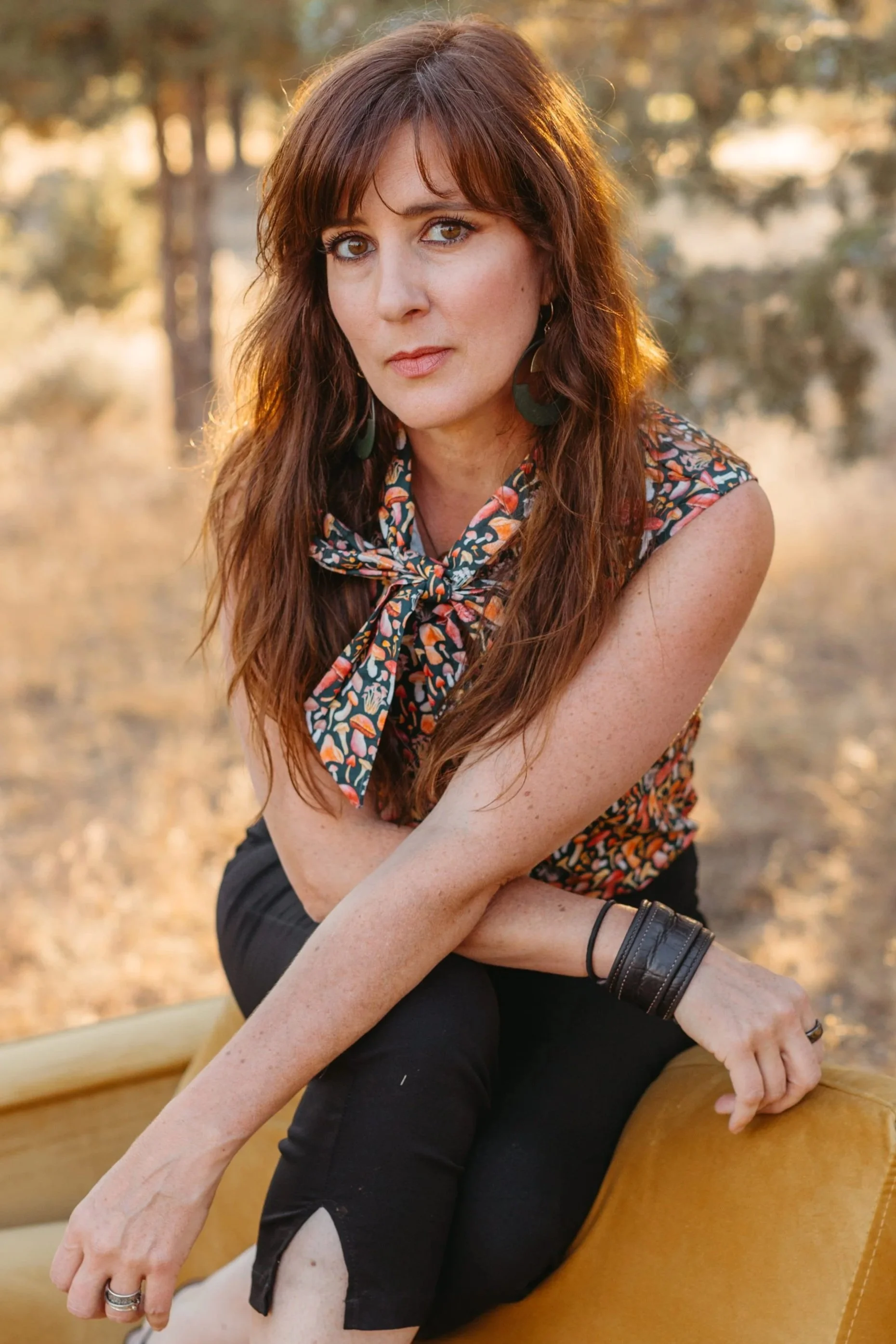
Meet Dr. Sabrina Hadeed
Therapist | Professor | Supervisor
Systems Centered Wellness was created by Dr. Sabrina Hadeed after more than two decades of clinical work with children, teens, adults, couples, and families across diverse settings.
Her career began in child and family services, where she spent nearly a decade working in community mental health and school-based programs, eventually serving in leadership and supervisory roles. During those years, she supported families navigating crisis, developmental challenges, and complex relational dynamics.
She later spent seven years working with adolescents in wilderness therapy, where she witnessed firsthand how young people’s struggles are rarely isolated from the systems around them. Family dynamics, identity development, cultural expectations, and environmental stressors all shaped the challenges teens were facing. This work deepened her commitment to relational, experiential, and systems-based approaches to healing.
Over time her work expanded into private practice, couples therapy, divorce and co-parenting support, clinical supervision, and graduate-level teaching. Across these settings the same pattern kept emerging: people were often offered care that focused narrowly on the individual while leaving the surrounding systems unchanged.
Systems Centered Wellness was created in response to that gap.
What began as a solo practice has grown into a collective vision where therapy, coaching, group work, and integrative services can exist under one roof, guided by a shared relational philosophy. The goal was never simply to expand services, but to build a professional home that supports both clients and clinicians as whole people while maintaining strong ethical and clinical standards.
In addition to her clinical work, Dr. Hadeed has spent more than a decade supporting the next generation of therapists as a clinical supervisor and professor in clinical mental health and addiction programs. Her teaching and supervision style reflects the same relational philosophy that guides her clinical work. Rather than relying solely on theory, she often integrates stories from the field, lived experience, and her own humanity into the learning process. Much like in the classroom, the goal is not simply to pass on knowledge but to invite thoughtful reflection about what it means to practice with integrity, courage, and care.
Her supervision is informed by feminist theory and a social justice lens. In practice, this means supervision is collaborative, transparent about professional power structures, and focused on helping clinicians develop clarity, sustainability, and integrity in their work.
To reflect this philosophy, she sometimes playfully refers to supervision as “othervision.” The term challenges rigid hierarchies and invites a more collaborative learning relationship where curiosity, accountability, and humility are shared. In this model, everyone remains both teacher and student.
A Personal Foundation
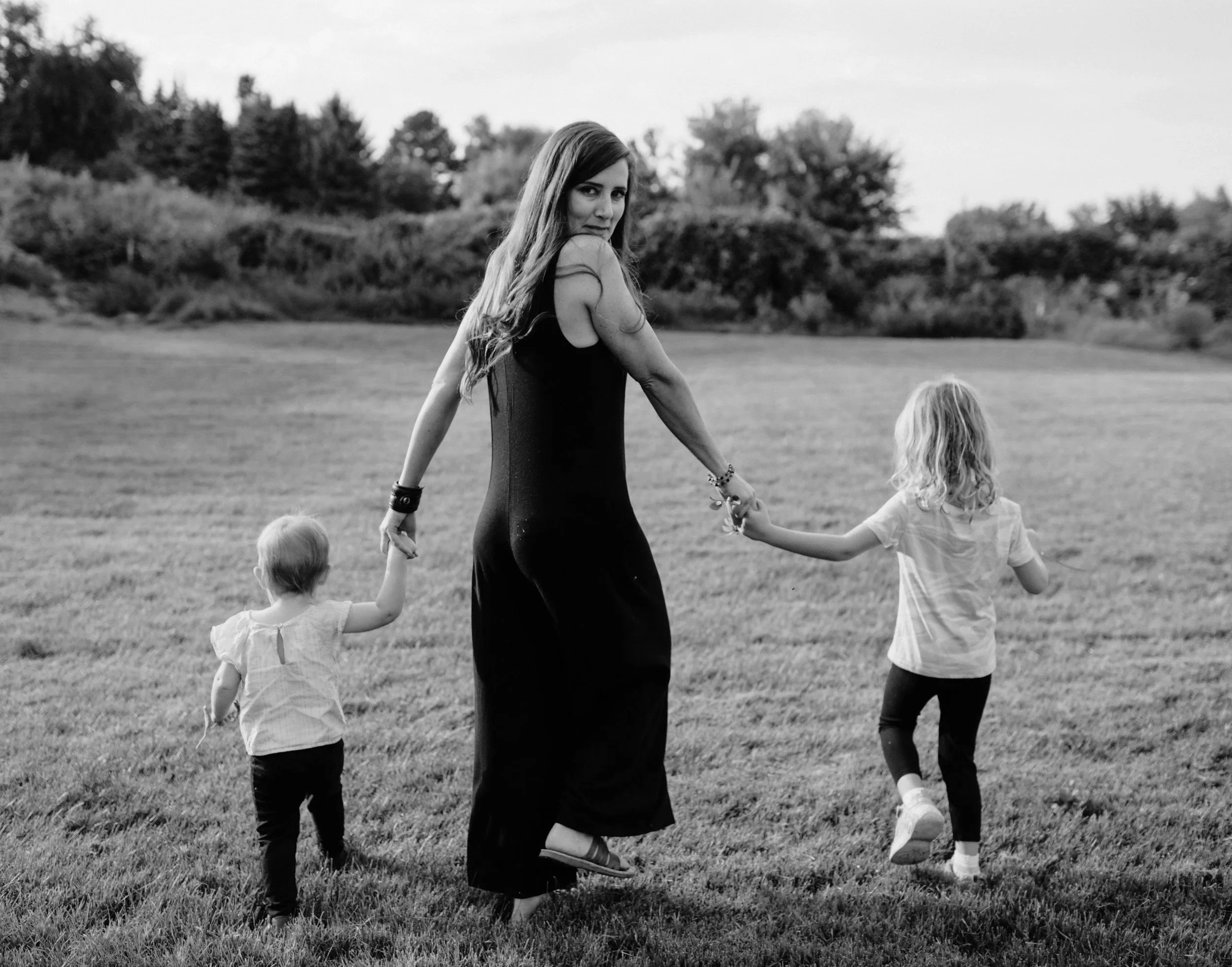
My path into this work wasn’t built on credentials alone.
It was forged in the fires of lived experience.
I grew up in a bicultural home filled with fierce love, resilience, and also deep struggle. My parents divorced when I was eighteen after my father came out as a gay man—an experience that could have fractured our family permanently. Instead, over time, my parents chose humility, repair, and compassion. We learned what it meant to grieve together, forgive each other, and build a different kind of family.
That experience shaped my belief in conscious, child-centered uncoupling and in the ripple effect that becomes possible when adults choose repair over resentment.
I’ve also walked through addiction and medical crises with family and friends, held the grief of loss, and witnessed both the beauty and the breakdown of the systems people live inside. These experiences taught me that healing is never just individual—it’s relational, systemic, and embodied.
As a young adult, I traveled widely and often felt more at home in unfamiliar places than in the environments I was expected to belong. After graduate school, I moved to Costa Rica and lived mostly off-grid in a jungle home. That season of life helped me reconnect with nature, rhythm, and a quieter, more intuitive sense of self—an experience that continues to shape how I understand healing today.
My academic training in existential phenomenology reinforced what life had already shown me: people cannot be reduced to diagnoses or checklists. Suffering always exists in context—in families, cultures, histories, and systems of power.
Across two decades of work, one truth has remained constant:
Healing is not a solo project.
It happens in relationship, in systems, and in the spaces between people.
Systems Centered Wellness grew from that realization.

Al-Husn, Syria
Photo taken by Sabrina in 2008 inside one of the oldest preserved medieval castles in the world called Krak des Chevaliers
Cultural Roots
The vision for Systems Centered Wellness is shaped not only by professional training and clinical experience, but also by cultural lineage.
Dr. Hadeed grew up in a Syrian American family where care did not exist only inside formal systems. Support often happened around shared meals, through storytelling, during grief and celebration, and through the quiet ways extended families show up for one another across generations.
In many cultures, healing has always been relational. It lives in community, in ritual, and in collective responsibility for the well-being of the group.
That understanding continues to shape the philosophy of this practice.
At Systems Centered Wellness, relational care, scientific rigor, and embodied wisdom are not treated as opposing forces. Evidence-based clinical practice, cultural knowledge, and lived experience can coexist when approached with thoughtfulness, ethical clarity, and humility.
We approach all interventions with discernment rather than dogma. This means moving at the pace of readiness, naming power dynamics clearly, prioritizing safety and consent, and resisting both hype and dismissal.
Healing is rarely about a single method. It is about fit, timing, relationship, and the systems that allow change to become sustainable.
Work with us!
If you're interested in working with us, complete the form - we'll review your message and get back to you within 48 hours.